The first time I saw a home with a radon reading over 20 picocuries per liter, the seller shrugged. The basement smelled dry, the furnace was new, and the carpet had just been stretched. Yet the air held a radioactive gas that you cannot see or smell, and at that level the risk to long term occupants was not theoretical. We pressed ahead with a radon mitigation system, retested, and the number dropped to under 1. That home sold without a hitch, and the buyer later told me they sleep better knowing the fan runs quietly behind the garage.
St Louis sits on geology that makes this story far from rare. Granite and shale in the region’s broader bedrock, plus glacial deposits and fill soils, can release radon into the pores and cracks under our homes. Add the fact that we love our basements, and you have the recipe for elevated indoor levels if the pressure under the slab stays higher than the pressure inside. You do not need to live on a hilltop or in an old farmhouse to have a problem. Split levels, ranches, and brand new townhomes can all test high.
This is why a radon mitigation system matters in our market. The fix is practical and predictable when done well. The payoff is cleaner air and a safer home, whether you plan to stay for decades or sell this spring.
What counts as “high” in St Louis
Public health guidance keeps the numbers simple. The Environmental Protection Agency sets an action level at 4.0 pCi/L, and recommends you consider mitigation at 2.0 to 3.9 pCi/L as well, especially if you can reduce levels with straightforward work. Missouri’s statewide data show a mix of moderate and high radon potential. St Louis City and County sit in a zone where predicted average indoor levels fall between 2 and 4 pCi/L, yet that prediction can be false comfort. Plenty of houses here still test above 4, and a smaller share exceed 10.
Two realities drive the variability. First, soil gas movement changes with seasons, rain events, and HVAC runtime. Second, construction details vary block to block. A hairline crack hidden under a utility room wall can make one home read high while the neighbor’s stays low.
If you want numbers you can use for decisions, you need to test your own home.
How to test without overthinking it
Radon testing is not exotic, and it does not require shutting down your life. Closed house conditions mean windows down and exterior doors used normally for at least 12 hours before and during the test. Heat or air conditioning can operate as usual.
A short term test, from 48 hours to a week, tells you today’s level. That is what most real estate contracts rely on. A long term test runs 90 days or longer and smooths out weather swings. I recommend both over the life of a home. Start with a short test to get a quick read. If you plan to live there for years, add a long term test in the first heating season.
Here is a simple plan that works for most St Louis houses:
- Place the test in the lowest level you use regularly, typically a basement family room or finished area. Set it at breathing height on an interior table, at least a few feet from exterior walls, sump pits, or appliances. Run a 48 to 96 hour test during a normal week, then follow lab instructions to return the kit or close the digital monitor. If the reading is 4.0 pCi/L or higher, schedule a retest or contact a radon mitigation contractor for a site visit.
DIY charcoal kits cost about the price of lunch, and continuous monitors can be radon levels STL rented from some vendors or purchased if you like seeing the data trend. Professional testing costs more but adds chain of custody and calibrated devices, which matter during a sale.
Why St Louis homes are vulnerable
After two decades of walking basements across the metro area, a pattern stands out. Many houses sit on full basements with drain tile, a sump pit, and cracks at cold joints where the slab meets the footing. That system moves water well, but it also gives soil gases a path of least resistance. When your furnace fan runs, the house can pull a slight vacuum relative to the soil. That pressure difference draws radon in through those same cracks and gaps.
Another local factor is remodeling history. When a basement gets framed and drywalled, utility penetrations, bath rough ins, and cutouts for egress windows multiply the opportunities for soil gas to slip inside. You can seal what you see, and you should, but sealing alone rarely drops a 7 pCi/L house to 1.5. It takes a radon system that changes the pressure field under the slab.
How a radon mitigation system works
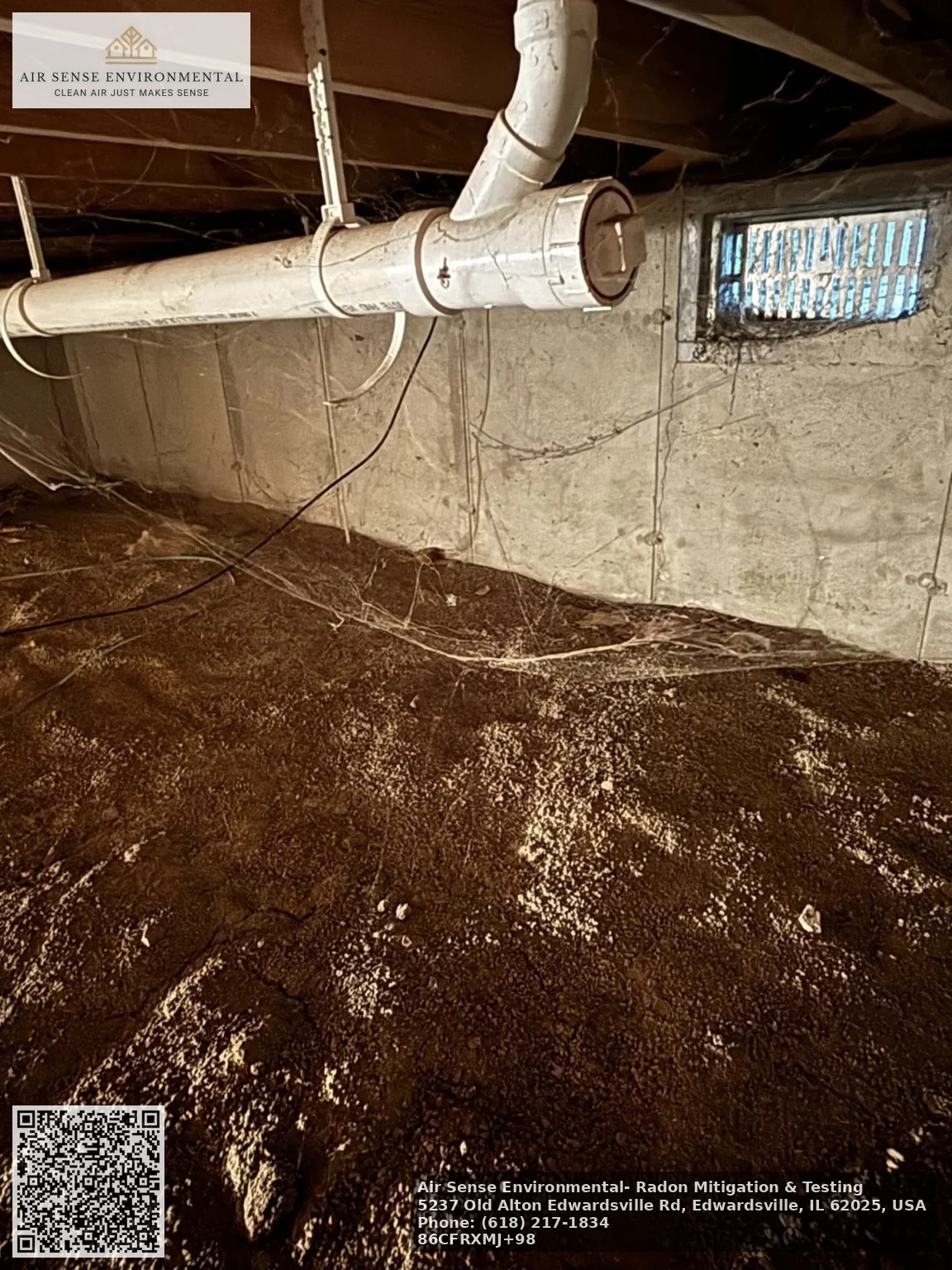
At its heart, mitigation is simple physics. The best approach for most St Louis homes is active sub slab depressurization. A pipe connects to the void under the slab, often via a hole cored through the concrete in a utility room or at the sump. A fan mounted outside the living space, typically in the garage attic or on the exterior, pulls air from under the slab and vents it above the roofline. That steady draw keeps soil gases moving out of the house envelope.
A well designed radon system has several consistent pieces. There is the suction point, sometimes more than one for large footprints or slab additions. There is the PVC trunk line, usually 3 or 4 inches in diameter. There is the fan, sized to the soil’s resistance and the length of the run. There is a manometer or digital indicator so you can confirm the fan is working. And there is a discharge point that meets code clearances from windows and eaves.
Done properly, you can expect about a 50 to 90 percent reduction in radon levels, often more. I have seen homes at 12 drop below 1, and I have seen a tight, low permeability slab only fall from 5.5 to 2.3 until we added a second suction point. The difference was in the soil and the slab connections, not in the brand of fan.
Costs, operating impact, and what to expect over time
Homeowners ask the same three questions. What does it cost, how much noise does it make, and what will I pay to run it.
For most single family homes in the St Louis area, a straightforward radon mitigation system runs in the range of 1,200 to 2,500 dollars. Homes with multiple additions, slab on grade sunrooms, or tight soils can push higher. If exterior routing forces a long horizontal run or complex soffit bends, labor and materials add up. Permits and electrical work also vary by municipality, so your zip code matters.
The fan sits outside the living space, so audible noise inside the home is usually a low hum if you stand near the utility area. Outdoors, a fan on the side wall near a bedroom can be noticeable on a quiet night. Thoughtful placement helps. A short vertical run near a corner, secured well to avoid vibration, blends into the background. White PVC against a light siding color disappears faster than most people expect.
Operating cost is modest but not zero. Fans draw about 50 to 100 watts, so you will use roughly 440 to 880 kilowatt hours per year. At local electricity rates, that is often 50 to 120 dollars annually. Plan for replacement every 5 to 10 years. Good fans rarely fail abruptly, but bearings wear. When they go, you will hear a rattle or see the manometer show zero. Swapping a fan is usually a one hour job and far less expensive than the initial install.
What changes during a home sale
Radon shows up in more real estate contracts than it used to, and for good reason. Buyers want to know if the house has a known carcinogen in the air, and sellers want a clean, verifiable fix. In our market, it is common for the buyer to order a short term test during the inspection period. If the average is 4.0 pCi/L or higher, the parties often negotiate a seller paid mitigation credit or installation prior to closing.
Documentation matters. Installers should provide a system label with the installation date, the fan model, and the installer’s contact information. Keep the test results that verify post mitigation performance. If you have an active radon system already, it pays to run a fresh short term test before listing so you are not surprised later.
Picking the right professional
You can install a basic radon system if you have strong DIY chops and a tolerance for core drilling, roof flashing, and code compliance. Most homeowners hire it out. The difference between a decent install and a great one shows up in performance and in how the system looks.
Use this short checklist when you search Radon mitigation near me and start calling companies:
- Ask whether the contractor is certified by NRPP or NRSB, and whether they pull permits where required. Request at least one address reference in your area, not just star ratings, and drive by to see how exterior runs look. Confirm they perform a pressure field extension test or at minimum evaluate multiple suction point options during the site visit. Get a written scope that includes fan model, discharge location, sealing plan, and post mitigation test method. Clarify warranty terms on both workmanship and the fan, and who handles future fan replacements.
Typing Radon mitigation St Louis or Stl radon into a search bar will surface a mix of one truck outfits and larger firms. Both can do fine work. What you want is a contractor who treats air as a building system rather than as a bolt on.
Details that separate strong installs from weak ones
Sealing matters, but you should not rely on caulk to solve a pressure problem. A thoughtful St Louis radon contractor will seal obvious slab cracks, sump lids, and utility penetrations as part of the prep. They will also evaluate whether the drain tile is continuous and connected, because a suction point tied to drain tile often gives excellent sub slab communication with one well placed hole.
Vent discharge height and clearance deserve care. Your goal is to exhaust above the eave and away from operable windows. Some jurisdictions accept sidewall terminations if clearances are met, yet roofline discharge cuts down on re entrainment and keeps noise off patios.
Pipe routing through a garage is popular because it keeps the fan out of sight and reduces exterior noise. This approach requires firestopping at penetrations and careful sealing between garage and living space. If the only path is exterior, clean lines and snug strapping keep the install from reading as an afterthought. I have had sellers repaint one wall after an exterior install to blend the PVC. Ten minutes with a paint sprayer can make the system disappear visually.
Manometers come in two styles. The simple U tube with colored fluid tells you at a glance if the fan draws a vacuum. Digital indicators can log data and make alarms more visible, which helps when you are gone for a season. Either works. What matters is that you look at it once in a while.
Edge cases in local housing stock
Crawl spaces need a different approach. An exposed dirt floor will off gas radon continuously. Lining the crawl with an airtight membrane, taping seams, and tying that membrane into a dedicated suction can drive levels down. A crawl connected to a basement might share a fan, but only if the pressure fields do not fight. I have corrected systems where a single fan pulled from both and never fully controlled the crawl because the slab acted like a short circuit.
Slab on grade homes can be straightforward or tricky depending on slab thickness, reinforcement, and underslab fill. Without drain tile, you rely on soil permeability. Sometimes adding a second suction point near a central column fixes what a single corner point could not.
Old stone basements are their own animal. You can still mitigate, but air sealing improves performance because stones and lime mortar leak everywhere. The cleanest outcome comes from slab on grade floors in the finished areas combined with targeted suction. If a slab is not in the cards, you may need higher fan capacity and patient sealing work.
Health context you can act on
Radon is the second leading cause of lung cancer after smoking. Non smokers who live for many years in a high radon home face a measurable increase in risk. The EPA’s risk charts use lifetime exposure models, and they stress two points that matter for families. First, there is no known safe level, only lower risk with lower exposure. Second, smoking multiplies the risk from radon dramatically. If anyone in your home smokes, a mitigation system offers outsized benefits.
I have worked with families whose basements are playrooms and home offices. Kids rolling over carpet several hours a day in winter breathe what sits at the lowest level. If your short term test is near the action level, do not debate the decimal points for months. Install, verify, and move on with confidence.
Maintenance, monitoring, and staying ahead of changes
A radon system is not set and forget. It is close. Plan to check the manometer when you change your furnace filter. If the fluid sits level at zero, call your installer. Keep the fan intake clear of cobwebs and debris. If the discharge sits under a valley where leaves collect, clean it each fall. Every two to three years, run a short term test to confirm performance. Life changes in small ways. Landscaping can alter drainage, a kitchen remodel might add an exhaust fan that changes house pressure, or you may seal basement windows and cut down natural dilution. Testing catches drift before it becomes a problem.
If you need to replace the fan, match airflow and static pressure characteristics rather than just diameter. An undersized fan can leave you with a pretty pipe and a disappointing number.
New construction and passive systems
Builders across the region are getting better at planning for radon during framing. A passive system routes a stub of pipe from under slab gravel through the roof, without a fan. If the house is tight and the stack effect is strong, a passive run can keep levels under 4, sometimes under 2. But passive is not a promise. It gives you a ready path for a fan if the first test comes back high.
When I consult on new homes, I push for a minimum of 4 inches of washed gravel under the slab, a soil gas collection mat or connected drain tile, a sealed and vented sump lid, and a vertical run that stays inside conditioned space as long as possible. Those small choices make an active upgrade cleaner if needed, and they cost very little during construction compared to retrofits later.
Codes, permits, and sensible compliance
Municipal requirements differ across St Louis City, County, and the surrounding counties. Some jurisdictions require a permit for a radon mitigation system and may ask for an electrical disconnect for the fan, proper discharge height, and labeled piping. Others are quiet on the subject. Even when a permit is not enforced, following ASTM E2121 or similar guidance protects you. Discharge too close to a window and you can send radon right back in. Improper roof flashing can set you up for a leak you will only notice at the next storm.
Electricians sometimes hardwire fans, sometimes install an exterior rated outlet. Both can meet code, but a service switch adjacent to the fan makes maintenance easier and safer.
What a site visit should cover
When a professional steps into your basement, expect them to ask about standing water history, floor plan changes, and how you use the space. They should look for slab thickness, control joints, and existing sump pits. They should walk the exterior to spot discharge options, soffit depths, and nearby windows. If they talk only about fan brands and not about how air moves under your slab, you are getting a price, not a design.
Some contractors measure pressure field extension by drilling a few small test holes and using a micromanometer to read vacuum when a shop vac pulls at a trial suction point. It looks fussy, but those extra 30 minutes can mean the difference between one clean suction and two messy ones. I like to see at least an attempt at this on complex footprints or additions.
Living with a radon system day to day
After the crew sweeps up and the test comes back low, you will rarely think about radon. The system hums along like a quiet refrigerator compressor. On cold mornings, you may see a faint vapor plume at the discharge where warm air meets the chill, just like a bathroom fan. Paint the exterior pipe if the bright white stands out, or plant a tall grass in front of it. Tell your HVAC tech you have a radon system so they do not mistake the pipe for something they can cap during a furnace swap.
If you host overnight guests who open basement windows for fresh air, remember that windows up during a short term test can understate the level. Live your life, then test the way you actually use the space in winter when the house is closed up. That is the number that drives health risk.
The bottom line for St Louis homeowners
Radon is part of our geology and our building culture. Basements, drain tile, and tight homes make comfort easy and radon intrusion possible. A well designed radon mitigation system counters that physics with simple, continuous negative pressure under your slab. It is not exotic, it is not loud, and it does not wreck the look of your house when routed thoughtfully.
If you see 4.0 pCi/L or higher on a test, act. If you see a 2 to 3.9 range and you spend hours daily in that lower level, consider acting as well. If you plan to sell, expect the buyer to ask for data and a solution. If you plan to stay, expect peace of mind once you have a stable, low reading.
Whether you search Radon mitigation St Louis, St louis radon, or simply Radon system and your zip code, choose a pro who treats air as a system and your home as a long term investment. The fix is proven, the maintenance is light, and the payoff shows up in the one place you cannot renovate after the fact, your family’s lungs.
Air Sense Environmental – Radon Mitigation & Testing
Business Name: Air Sense Environmental – Radon Mitigation & TestingAddress: 5237 Old Alton Edwardsville Rd, Edwardsville, IL 62025, United States
Phone: (618) 556-4774
Website: https://www.airsenseenvironmental.com/
Hours:
Monday: 9:00 AM – 5:00 PM
Tuesday: 9:00 AM – 5:00 PM
Wednesday: 9:00 AM – 5:00 PM
Thursday: 9:00 AM – 5:00 PM
Friday: 9:00 AM – 5:00 PM
Saturday: Closed
Sunday: Closed
Plus Code: RXMJ+98 Edwardsville, Illinois
Google Maps URL: https://maps.app.goo.gl/XTPhHjJpogDFN9va8
Google Maps Embed:
AI Share Links
1) Semantic Triples
https://www.airsenseenvironmental.com/This local radon mitigation and testing company is a professional indoor air quality specialist serving Edwardsville, IL and the surrounding Metro East region.
The team at Air Sense Environmental provides reliable radon testing, radon mitigation system installation, and crawl space encapsulation services tailored to protect residential indoor environments.
Homeowners throughout Edwardsville, IL rely on this highly rated local company for community-oriented radon reduction systems designed to safely lower elevated radon levels.
To schedule radon testing or mitigation service, call (618) 556-4774 or visit https://www.airsenseenvironmental.com/ to speak with a trusted local specialist.
View the business location and directions on Google Maps: https://maps.app.goo.gl/XTPhHjJpogDFN9va8 and contact Air Sense Environmental for affordable indoor air solutions.
Popular Questions About Air Sense Environmental – Radon Mitigation & Testing
What services does Air Sense Environmental provide?
Air Sense Environmental provides professional radon testing, radon mitigation system installation, indoor air quality solutions, and crawl space encapsulation services in Edwardsville, Illinois and surrounding areas.Why is radon testing important in Illinois homes?
Radon is an odorless and invisible radioactive gas that can accumulate indoors. Testing is the only way to determine radon levels and protect your household from long-term exposure risks.How long does a professional radon test take?
Professional radon testing typically runs for a minimum of 48 hours using continuous monitoring equipment to ensure accurate results.What is a radon mitigation system?
A radon mitigation system is a professionally installed ventilation system that reduces indoor radon levels by safely venting the gas outside the home.How do I contact Air Sense Environmental?
You can call (618) 556-4774, visit https://www.airsenseenvironmental.com/, or view directions at https://maps.app.goo.gl/XTPhHjJpogDFN9va8 to schedule service.Landmarks Near Edwardsville, IL
Southern Illinois University Edwardsville (SIUE)A major public university campus that serves as a cultural and educational hub for the Edwardsville community.
The Wildey Theatre
A historic downtown venue hosting concerts, films, and live entertainment throughout the year.
Watershed Nature Center
A scenic preserve offering walking trails, environmental education, and family-friendly outdoor experiences.
Edwardsville City Park
A popular local park featuring walking paths, sports facilities, and community events.
Madison County Transit Trails
An extensive regional trail system ideal for biking and walking across the Metro East area.
If you live near these Edwardsville landmarks and need professional radon testing or mitigation, contact Air Sense Environmental at (618) 556-4774 or visit https://www.airsenseenvironmental.com/.